A 60 SECOND GLANCING EYE ON BUSINESS, MARKETS & ECONOMY

Global Markets


Live World Indices are powered by Investing.com

Monday, 21 March 2016

"Peak Oil Today" - March 21, 2016

MARKET IMPLICATIONS

Solar shift: 

With more than a million US houses set to have solar panels by the end of next month, grid managers serving the eastern US plan to cut the amount of electricity they buy from conventional plants by about 1,400 megawatts, starting in 2019, according to industry consultant ICF International Inc. That’s enough juice to power about 780,000 households. The result could be as much as $2 billion in lost revenue for generators that are already reeling from lower demand, tight environmental regulation, and depressed prices.  


"PEAK OIL TODAY"

The very best weekly analysis and evaluation of the global peak oil situation with additional briefings, charts and videos, added by the curator from accredited professional sources, to enhance the informed investor's knowledge and understanding of its deep complexities and evolving outlooks. 

Everyone should "Bookmark ' this very important weekly post to stay abreast of this most critical aspect of global economics and life on this planet.

Free Logo From Thefreelogomakers.com


Peak Oil Review – 21 March 2016 

By Tom Whipple

Association for the Study of Peak Oil USA


Quote of the Week
“It could be a lot of years before you see any meaningful rebound in the dividend [of oil companies]. It’s tough to have a really conservative, stable investment in a business that can’t control the price of its own product.”
Josh Peters, Editor, 
 Morningstar Inc.’s DividendInvestor Newsletter
Contents
1.  Oil and the Global Economy
2.  The Middle East & North Africa
3.  China
4.  Russia/Ukraine
5. The Briefs


1.  Oil and the Global Economy

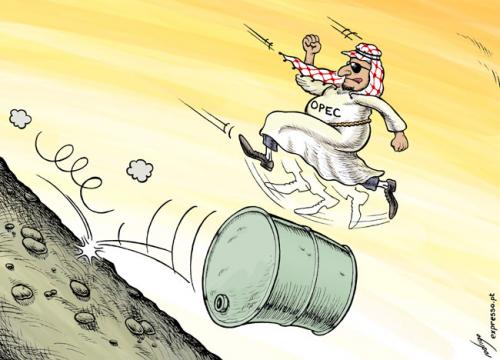
The price rally that has been on-going since mid-February continued last week with US futures closing Friday at $39.44 a barrel, up 2.4 percent for the week, and London futures closing at $41.20 up 2 percent. Last week the move came from a combination of what one analyst termed a “brilliant communications strategy” and other developments that normally lead to higher prices. The “brilliant communications strategy,” of course, is the meeting in April during which those countries that either cannot or do not want to increase oil production are supposed to agree not to increase their production. During the week, Moscow even hinted that Iran might join the group after it increases its oil output to 4 million b/d, a goal that might take many months or even years to reach. The producers now are scheduled to meet on 17 April in Qatar; the meeting is being heralded as the first agreement to limit global oil production in 15 years even though it is unlikely to have any real impact on oil production.
There was, however, some news last week of the kind that moves oil prices. The US Federal Reserve announced that its plan to increase US interest rates is likely to be more limited than previously announced. This news pushed down the dollar and moved oil prices higher. US crude stocks grew by only 1.3 million barrels the week before last which was the smallest gain in the last five weeks. The markets ignored the storms in the Gulf of Mexico that week which restricted imports. Traders continue to watch the US rig count, which last week fell to an all-time low of 476, down from 1,069 a year ago and 4,530 back in 1981. Rigs drilling for oil last week increased by one rig which is meaningless, but brought hopes of higher prices to the markets. Although oil production in the US continues to slip, the resilience of the industry has been remarkable considering the low prices and the number of rigs continuing to drill for oil.
The mystery of 800,000 b/d of missing oil has some analysts wondering if the IEA’s story of a 1-2 million b/d surplus in world oil production has been overblown. They are saying that supply and demand could be much closer to being in balance than most believe. It seems that last year 800,000 b/d of what was thought to be surplus oil production did not end up in OECD storage tanks when the year was over. There are several possible reasons for this. Oil could be going to storage in tanks outside of the OECD inventory count; oil production was lower than estimated, or oil consumption was actually higher.  If the 800,000 b/d never existed and were only the result of bad accounting and misestimates, then we should be much closer to a global rebalance and price rebound than currently forecast.
Bad news for the oil industry, such as bankruptcies, restrictions on financing, or large cutbacks in capital spending, continues to be announced daily. At some point in the coming years, there clearly will be some major drops in production unless capital spending and drilling for new oil increases rapidly, depletion will take its toll.

Natural Gas 11 March 2016
Natural gas prices which have been below $2 per million BTUs since mid-February and at one point were trading around $1.65, rebounded to close at $1.90 last week. These prices, of course, still are well below the actual costs of production, which is why we are starting to see a reduction in the-drilling-for-gas rig count and gas production.
READ MORE

Sunday, 20 March 2016

EYE on the World: Soon, NO WINTERS in Alaska?

Sled Dogs Cheer Global Warming  
Inline images 4
Ain't life grand?
"The winters keep getting warmer. The racers keep getting faster.
When Dallas Seavey and his team of sled dogs arrived in this remote old gold rush town on the Bering Sea shortly after 2 a.m. on Tuesday, Seavey celebrated his fourth victory in just five years in the nearly 1,000-mile sprint across the Alaska wilderness that the world knows as the Iditarod dog sled race. At eight days, 11 hours, 20 minutes and 16 seconds, it was the fastest time in Iditarod history — and the second time Seavey set a course record on his way to victory."
LA Times, March 2016


New Stock Market Crash Inevitable - A Special Report by Wim Grommen


New Stock Market Crash Inevitable

Every production phase or society or other human invention goes through a so-called transformation process. Transitions are social transformation processes that cover at least one generation. In this article I will use one such transition to demonstrate the position of our present civilization and  that a new stock market crash is inevitable.


​ 
 
Iowa Farmers Heading for Cleaners
​ 

​ No Repeat of Farm Crisis

Still, this downturn is unlike the 1980s farm crisis, say Northey and others.
Iowa farmers and investors purchased land with healthy down payments, limiting how much they're leveraged, experts say. And interest rates are significantly lower.
Farmers in the 1980s were paying rates as high as 20 percent, Northey said.
"We still have solid demand," he said. "We've just had some big production years — back to back."


US Shale Producer Faces Biggest $10 Billion Bankruptcy


"The writing has been on the wall for quite a while now," said Kevin Kaiser, an analyst at research firm Hedgeye. Kaiser recommended in 2013 that investors short Linn.

"The company took on way too much debt, primarily in an effort to make distributions to its equity holders that it could never afford."
​ 

-- 


​" ​
Buddy, what's your "Cash Break-Even"?


"Many have already used lifelines like distressed debt exchanges and hired restructuring advisers, so absent that fast rise in WTI, some defaults will be inevitable. We estimate about $40 billion of additional outstanding energy bond debt will likely default this year."
ZERO HEDGE


Inline images 7

Friday, 18 March 2016

EYE on the World - Soon, NO WINTERS in Alaska?

Sled Dogs Cheer Global Warming  
Inline images 4
Ain't life grand?
"The winters keep getting warmer. The racers keep getting faster.
When Dallas Seavey and his team of sled dogs arrived in this remote old gold rush town on the Bering Sea shortly after 2 a.m. on Tuesday, Seavey celebrated his fourth victory in just five years in the nearly 1,000-mile sprint across the Alaska wilderness that the world knows as the Iditarod dog sled race. At eight days, 11 hours, 20 minutes and 16 seconds, it was the fastest time in Iditarod history — and the second time Seavey set a course record on his way to victory."
LA Times, March 2016


New Stock Market Crash Inevitable - A Special Report by Wim Grommen


New Stock Market Crash Inevitable
Every production phase or society or other human invention goes through a so-called transformation process. Transitions are social transformation processes that cover at least one generation. In this article I will use one such transition to demonstrate the position of our present civilization and  that a new stock market crash is inevitable.


​ 
Iowa Farmers Heading for Cleaners
​ 

​ No Repeat of Farm Crisis

Still, this downturn is unlike the 1980s farm crisis, say Northey and others.
Iowa farmers and investors purchased land with healthy down payments, limiting how much they're leveraged, experts say. And interest rates are significantly lower.
Farmers in the 1980s were paying rates as high as 20 percent, Northey said.
"We still have solid demand," he said. "We've just had some big production years — back to back."


US Shale Producer Faces Biggest $10 Billion Bankruptcy


"The writing has been on the wall for quite a while now," said Kevin Kaiser, an analyst at research firm Hedgeye. Kaiser recommended in 2013 that investors short Linn.


"The company took on way too much debt, primarily in an effort to make distributions to its equity holders that it could never afford."
​ 

-- 


​" ​
Buddy, what's your "Cash Break-Even"?


"Many have already used lifelines like distressed debt exchanges and hired restructuring advisers, so absent that fast rise in WTI, some defaults will be inevitable. We estimate about $40 billion of additional outstanding energy bond debt will likely default this year."
ZERO HEDGE


Inline images 7

Thursday, 17 March 2016

Saudi Aramco, Shell Marriage - Parting is Such Sweet Sorrow

  Cash-Strapped Saudi's Reshaping  Itself

 “This partnership made sense when it was formed but things have changed and the market conditions have changed, so it makes sense for this partnership to be dissolved,” Auers said. 


 "It makes fundamental sense.”

Saudi Aramco, Shell to Break Up 18-Year U.S. Refining Marriage


Image result for aramco shell

Royal Dutch Shell Plc and Saudi Arabian Oil Co. are ending an 18-year refining partnership as the Anglo-Dutch titan prepares to sell billions of dollars of assets and the Middle East nation’s state oil company weighs an initial public offering.

Image result for aramco shellShell will assume control of two Louisiana refineries operated by the Motiva Enterprises LLC joint venture, as well as nine fuel terminals and rights to Shell-branded markets in Florida, Louisiana and the U.S. Northeast, the companies said Wednesday in a statement. Aramco will retain the Motiva name and take ownership of the largest U.S. refinery in Port Arthur, Texas, along with 26 terminals and exclusive license to sell fuel under the Shell brand across Texas and much of the U.S. Midwest and Southeast.

Shell will get some cash from Aramco following the split, a first step in The Hague-based company’s plan to sell $30 billion of assets in three years, a spokesman said. Chief Executive Officer Ben Van Beurden has pledged to raise money from divestments to help maintain dividends and recover some of the cost of buying BG Group Plc. Aramco, the world’s biggest oil producer, is exploring plans for an IPO that may give it a value of as much as five times that of Apple Inc., according to Bloomberg Intelligence.

“These assets ranked probably in the bottom quartile of Shell’s portfolio and they are going to be moved,” Fadel Gheit, an Oppenheimer & Co. analyst, said in a telephone interview on Wednesday. “They’ve got to fund the dividend.”

Aramco Options


Motiva, formed in 1998, has the capacity to process more than 1 million barrels of crude per day, and is the largest Saudi Aramco investment in the U.S. It’s been plagued by cost overruns and construction delays that eroded profits, Gheit said. The Port Arthur refinery suffered leaks and fires that delayed a $10 billion expansion to double the size of the plant.

The refineries Shell will own probably have a value of $4.35 billion and will generate about $800 million this year in earnings before income taxes, depreciation and amortization, Cowen and Co. LLC analysts including Sam Margolin said in a note to clients on Thursday. “The split aligns with” Shell’s strategy, the analysts said.

Options being considered by Aramco for the IPO include selling shares in the parent company, placing its domestic and overseas downstream joint ventures into a holding company and selling shares in that, or grouping together the companies joint ventures and smaller refineries, according to a person with knowledge of the matter.


Gasoline Output


“The division of Motiva will also make it easier for Saudi Aramco to sell part of a wholly-owned downstream asset in any future public offering instead of going through the long legality and pricing process with an international joint venture partner,” said Mohamed Ramady, a London-based independent analyst and former professor of economics at King Fahd University for Petroleum and Minerals in Dhahran, Saudi Arabia.

Image result for aramco shellThe division of assets will increase Shell’s capacity to produce gasoline, which “is likely to attract premium pricing, particularly during driving season,” Jason Gammel, a London-based analyst at Jefferies International Ltd., wrote in a report. It’s exposure to fuels like diesel and jet fuels will decrease, according to the report.

Shell and Aramco signed a letter of intent, the statement showed. A final agreement has yet to be reached, and no terms were released. The companies are still working on the amount of cash Shell will get from Aramco, the Shell spokesman said.

Van Beurden “has a very busy two years ahead of him and Simon is going to be cracking his calculator,” Gheit said, referring to Shell Chief Financial Officer Simon Henry.

Different Goals


Shell’s U.S.-traded depositary receipts have increased about 8.5 percent this year, outperforming the other four so-called supermajor oil companies: Exxon Mobil Corp., Chevron Corp., Total SA and BP Plc.

A former partner in Motiva, Chevron exited the partnership in 2002 as part of a settlement with regulators that allowed it to acquire Texaco Inc. Chevron’s divestment left Shell and the Saudis as 50-50 partners in the venture.

Shell and Saudi Aramco were already pursuing divergent goals within Motiva, John Auers, executive vice president at Turner Mason & Co., said in a telephone interview. The Texas plant that Aramco will own processes large quantities of Saudi oil; the Louisiana plants to be controlled by Shell refine mostly offshore Gulf of Mexico oil and nothing from Saudi fields, he said.

“This partnership made sense when it was formed but things have changed and the market conditions have changed, so it makes sense for this partnership to be dissolved,” Auers said. 

 " It makes fundamental sense.”

Wednesday, 16 March 2016

US Shale Producer Faces Biggest $10 Billion Bankruptcy


 "The writing has been on the wall for quite a while now," said Kevin Kaiser, an analyst at research firm Hedgeye. Kaiser recommended in 2013 that investors short Linn.

"The company took on way too much debt, primarily in an effort to make distributions to its equity holders that it could never afford."  

Linn Energy Says

 Bankruptcy May Be 

"Unavoidable"


"Sure is..."

Linn Energy LLC (LINE.O) said on Tuesday that bankruptcy may be unavoidable as the oil-and-gas producer missed interest payments amid a slump in oil prices.
The company, which operates in California, Wyoming and North Dakota shale fields, said there was substantial doubt about its ability to continue as a "going concern" after it decided to skip interest payments due on Tuesday.
It said it has a grace period of 30 days to make interest payments totaling around $60 million.
"We are continuing to work with our advisors to review a full range of strategic alternatives to reduce the company's overall debt," Linn Chief Executive Mark Ellis said in a statement.
With around $10 billion in debt, Linn would be the largest U.S. oil company to seek bankruptcy protection in the current energy rout.
HIGH FLYER TAKES NOSEDIVE
About 40 oil and gas producers across the globe have filed for bankruptcy since oil prices began to decline in late 2014, and up to a third of all energy companies may fail unless prices recover, consulting firm Deloitte said last month.
READ MORE

Blog Archive

Earth In Trouble